
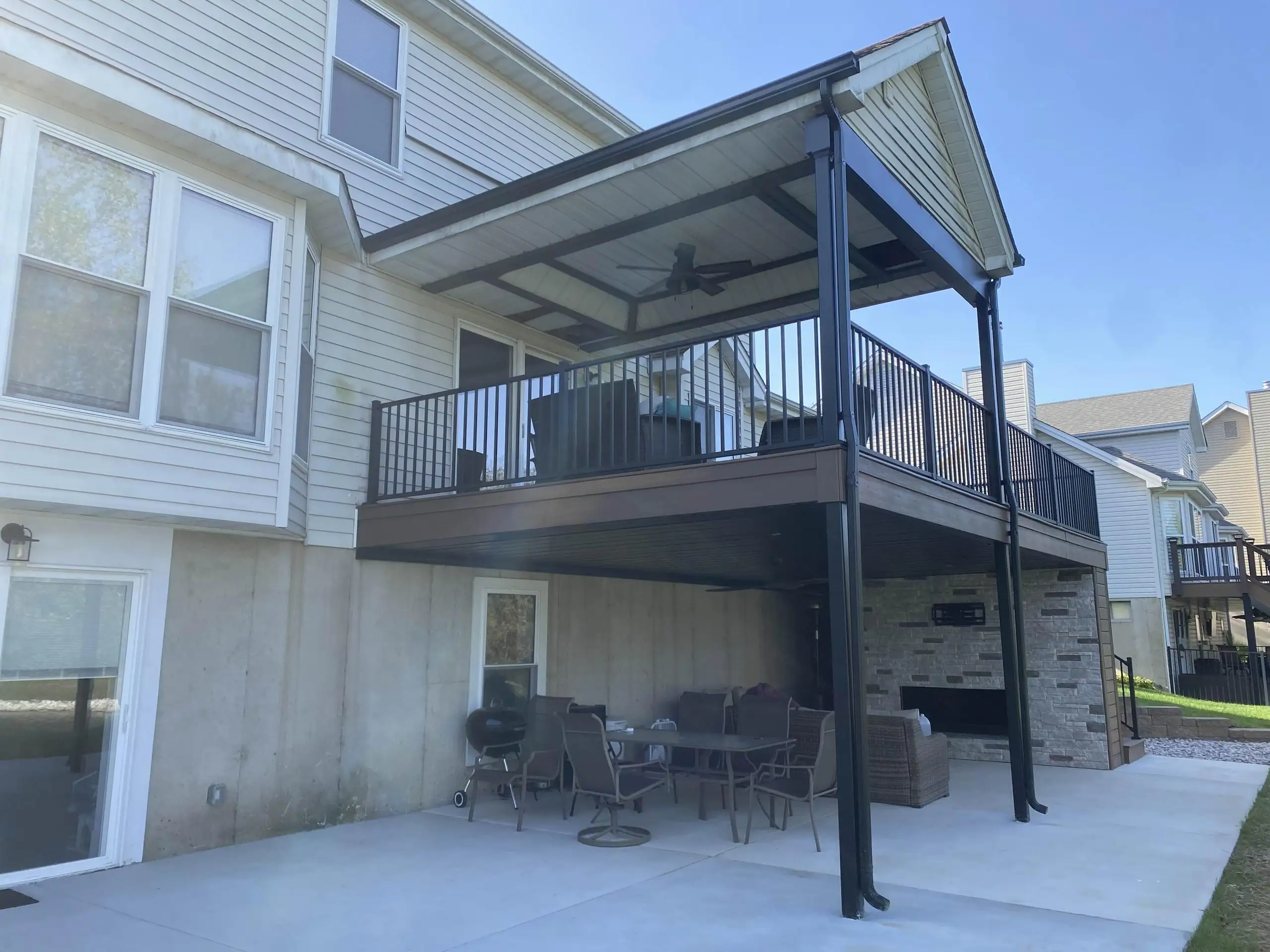
Deciding between a custom patio and pavers for your Missouri backyard is like choosing a smooth, poured foundation or a mosaic of durable tiles. Both create inviting outdoor spaces, but they handle our state’s wild weather—humid summers, 40 inches of rain, and brutal freeze-thaw cycles—differently. Let’s break down the details on custom patios in Missouri, options, pros, cons, and decision-making factors to guide your choice for this major hardscaping project.
A Quick Look
Confusion about new patios vs pavers in Missouri? Here’s a super quick guide to help you decide. If you’re after a sleek, modern look, a custom patio is a great choice. These seamless surfaces are perfect for a new fire pit or your outdoor furniture. The only thing to watch out for is our famous freeze-thaw cycles, which can sometimes lead to cracking down the road. Patios are also a bit more budget-friendly at first, typically costing between $8 and $20 per square foot.
Now, if durability is your top priority, pavers are the tough guys of the backyard world. Their interlocking system lets them shift and move with our tricky soil, so they hold up way better against those hot summers and icy winters without cracking. Plus, if a paver ever gets damaged, you can just replace it! They’re a bit more of an investment upfront at $14 to $24 per square foot, but their resilience can save you a headache (and money) on repairs down the line.
What’s a Custom Patio?
A custom patio is a ground-level outdoor area, often poured from concrete or built with flagstone slabs, shaped to your yard’s layout. In Missouri, they’re popular for clean lines and blending with home architecture, like curves around a fire pit or straight edges for a minimalist vibe. Materials include stamped concrete for texture, natural stone for rugged appeal, or basic sealed slabs.
Pros of Custom Patios
- Seamless Surface: Joint-free for a smooth setup, ideal for furniture or walking in flat Missouri yards like St. Louis suburbs.
- Design Flexibility: Stamp patterns to mimic brick or wood; costs $8–$20/sq ft installed, per local estimates.
- Quick Install: Concrete sets in days, perfect for Missouri’s short construction seasons.
- Affordable Base Option: $4,000–$8,000 for 200–400 sq ft, often cheaper than intricate paver designs.
Cons of Custom Patios
- Crack Risk in Freeze-Thaw: Missouri’s 40+ inches of rain and 100+ freezing days yearly (below 32°F) cause concrete cracks, needing repairs every 5–10 years.
- Repair Costs: Patching or resealing runs $500–$2,000; stamped finishes fade without yearly sealing.
- Less Permeable: Sealed surfaces pool water, increasing runoff in Missouri’s clay soils.
- Fixed Design: Altering shape or features post-install means major demolition.
What are Pavers?
Pavers are individual interlocking units—made of concrete, brick, or natural stone—laid over a sand or gravel base to form a patio. In paver vs. patio comparisons for Missouri, they excel in custom patterns, such as herringbone or garden borders. Set on compacted aggregate to allow for slight movement, they’re common in Kansas City and Springfield for patios and driveways.
Pros of Pavers
- Freeze-Thaw Resilience: Joints allow drainage and flex, cutting cracks in Missouri’s 50–100 freeze-thaw cycles; lasts 20–30+ years.
- Easy Fixes: Replace one paver for $10–$50, unlike re-pouring concrete.
- Permeable Drainage: Sand joints reduce erosion in rainy Ozark areas, and are eco-friendly for clay soils.
- Versatile Looks: Mix colors and shapes; $14–$24/sq ft installed, with DIY saving 30–50%.
Cons of Pavers
- Higher Initial Cost: $3,000–$10,000 for 200–400 sq ft, due to labor for precise laying (e.g., $15–$19/sq ft for brick in KC).
- Weed Growth: Joints need sweeping or polymeric sand ($200–$500 every 2–3 years) to block weeds.
- Longer Install: 1–2 weeks for contractors, as 4–6 inch gravel base is critical for Missouri’s uneven terrain.
- Settling Risk: Poor base causes uneven spots; skilled installers prevent $1,000+ repairs.
Key Factors to Consider
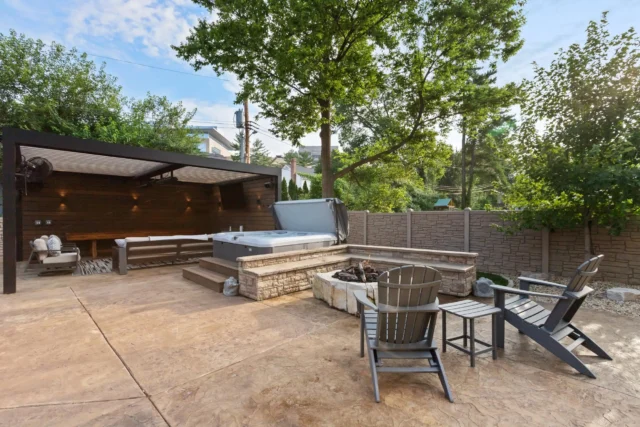
When comparing pavers vs patios for Missouri homes, focus on your yard’s needs and our climate’s challenges. Here are questions to steer your decision:
1. How Does Missouri Weather Affect Your Choice?
Missouri’s humid climate brings 40 inches of rain, 89°F summers, and 100+ freezing days with freeze-thaw cycles causing soil heave. Custom patios (especially concrete) crack under expansion; pavers’ flexible base copes better, per Sedalia landscapers.
2. What’s Your Yard’s Purpose?
For simple lounging or a grill spot, a custom patio’s smooth surface works. For patterns, borders, or walkway/fire pit integration, pavers offer more options for entertaining in Springfield’s mild fall.
3. What’s Your Budget?
Custom patios: $8–$20/sq ft ($4,000–$8,000 for 200–400 sq ft), cheaper for basic concrete. Pavers: $14–$24/sq ft ($3,000–$10,000), pricier for brick/stone but better ROI (5–7% home value boost in St. Louis). Include site prep ($1–$3/sq ft).
4. How Much Upkeep Can You Handle?
Custom patios need sealing every 1–2 years ($300–$800) and crack repairs ($500+). Pavers require yearly joint sweeping ($100–$300); polymeric sand cuts weeds.
5. What Look Do You Want?
Custom patios suit modern, seamless vibes with stamped textures matching brick homes. Pavers fit rustic or eclectic styles, like clay tones in Ozark yards or gray concrete for urban KC looks.
6. Are Eco-Friendly Materials a Priority?
Both options offer recycled materials: concrete patios (containing 30% fly ash) or permeable pavers reduce runoff in flood-prone Missouri. Pavers edge out for drainage, aligning with state water goals.
7. What’s Involved in Installation?
When planning custom patios or paver installs, understanding local permit and code requirements is key to avoiding fines or rework. Here’s a clear breakdown for pavers vs patios in Missouri, with St. Louis City as an example.
General Missouri Requirements
Missouri lacks statewide residential hardscaping codes; local jurisdictions enforce rules, typically adopting the 2018 International Residential Code (IRC) or the International Building Code (IBC) with modifications tailored to Missouri’s climate. Key details for custom patios and pavers:
- Permit Triggers:
- Required for projects >200 sq ft, with footings, excavation (>1,000 sq ft grading), retaining walls >4 ft, or electrical (e.g., patio lighting).
- Exempt: At-grade pavers or simple slabs <200 sq ft, no utilities or structural changes.
- Code Standards:
- Frost Depth: Footings 30–42 inches below grade (e.g., 30 inches in central MO) to prevent heave from 50–100 freeze-thaw cycles.
- Drainage: 1–2% slope to avoid pooling; permeable pavers support the Missouri Clean Water Law for erosion control in clay soils.
- Setbacks: 5–10 ft from property lines, per local zoning.
- Fees and Timeline: $50–$600 based on project value; 3–10 days for permit review. Inspections verify base compaction, grading, and stormwater compliance.
- Where to Check: Contact your city/county building department (search “[Your City] MO building permits patio”) for specifics.
St. Louis City Example
In St. Louis City, permits for custom patios or pavers follow strict rules to ensure safety and compliance:
- When Required: Projects >200 sq ft, poured slabs with footings, or installs with grading/electrical (e.g., outdoor kitchens). Exempt: At-grade pavers <200 sq ft, no excavation.
- Codes:
- 2018 IRC/IBC: Footings min. 12 inches deep, below 30-inch frost line (R403.1.4).
- Stormwater: Ordinance 20-48 requires permeable options or drainage plans to reduce runoff.
- Process: Apply at stlcitypermits.com; fees $100–$300 + $0.50–$1/sq ft. Review takes 3–5 days; inspections for sub-base and final surface.
- Contact: St. Louis City Building Division (314-622-3332) for questions or site plan reviews.
Next Steps for Homeowners
- Call your local building department to confirm permit needs before starting.
- Hire contractors like Solid Ground, who navigate permits and local codes.
- Budget $100–$600 for fees; non-compliance risks $500–$5,000 fines or demolition orders.
Custom Patio and Paver Designs
Your hardscape’s design shapes your Missouri yard’s function, so here’s a look at specific ideas for pavers vs patios that match local homes and weather. Four options, two each, with materials and notes.
Custom Patio Designs
- Modern Slab Simplicity
A 12×16-foot poured concrete patio with light gray stamping and integral color, set in a Lee’s Summit flat yard. Add rebar for freeze-thaw strength and a broom finish for traction. Pair with built-in planters for a clean, low-profile look. Suits urban Missouri homes for quick outdoor meals. - Rustic Stone Extension
A 14×14-foot flagstone patio with irregular limestone slabs mortared on a concrete base, ideal for Eureka’s wooded lots. Include subtle curves and gravel accents for drainage. Holds up to clay soil shifts, offering a natural vibe for fall gatherings..
Paver Designs
- Classic Interlock Pattern
A 10×12-foot concrete paver patio in a herringbone layout, gray units on a permeable base, for a Columbia backyard. Polymeric sand joints prevent weeds; soldier course edges add definition. Blocks 70% runoff, perfect for rainy Missouri springs. - Elegant Brick Border
A 12×12-foot clay brick paver patio with basketweave center and straight borders, powder-coated for fade resistance, in a Kansas City yard. 6-inch gravel base resists heave up to 50 cycles. Add LED edging for night use.
Pro Tip: Maximize Durability
For custom patios, use air-entrained concrete (5–7% air voids) to resist freeze-thaw expansion; seal with silane annually. For pavers, install on 4–6 inches of compacted gravel with geofabric; choose ASTM C936-rated units for Missouri’s 50–100 cycles. Test soil pH (aim 6.0–7.0) and slope 1–2% for drainage; confirm with a local engineer.
Pavers vs. Custom Patios: A Quick Comparison
| Feature | Custom Patio | Pavers |
| Weather Resistance | Moderate (cracks in freeze-thaw) | High (flexes with cycles) |
| Cost | $8–$20/sq ft | $14–$24/sq ft |
| Maintenance | Sealing yearly, repairs 5–10 yrs | Joints yearly, spot fixes |
| Style | Seamless, modern | Patterned, versatile |
| Use | Smooth lounging | Detailed entertaining |
| Installation Time | 3–7 days | 5–14 days |
Can You Combine Them?
Hesitant? Hybrid it! A concrete base with paver borders adds pattern without full commitment, or layer permeable pavers over a slab for drainage. In Missouri’s clay soils, this boosts stability for sloped Joplin yards.
FAQs: Custom Patios vs. Pavers
How long does it take to build a 12×12-foot custom patio compared to pavers?
It takes 3–5 days, including pouring and curing concrete for a smooth finish. Pavers require 5–7 days, as contractors must excavate, lay a 6–8 inch gravel base, and precisely set interlocking units to ensure stability in clay-heavy soils.
Do pavers handle Missouri’s freeze-thaw cycles better than concrete patios?
Yes, pavers outperform concrete in freeze-thaw conditions (50–100 cycles yearly). Their flexible joints allow 1–2 inches of movement to resist soil heave, while concrete patios are limited to 0.5-inch crack resistance.
What type of base is required for a custom patio versus pavers?
- Custom Patios: Need a 4-inch compacted gravel base with rebar to anchor concrete against freeze-thaw stress.
- Pavers: Require a 6–8 inch aggregate base topped with sand for drainage and flexibility, ideal for handling the state’s clay soils and heavy rainfall.
How often should a custom patio be sealed compared to maintaining pavers?
Custom patios require sealing every 1–2 years to protect against moisture and cracking. Pavers need joint maintenance every 2–3 years, typically sweeping or adding polymeric sand to prevent weed growth and ensure stability.
Which suits a 200 sq ft sloped Missouri yard?
Pavers, with stepped bases for 5–10% slopes. Custom patios risk pooling on uneven ground.
How do custom patios and pavers impact drainage in Missouri’s rainy climate?
Custom patios, like concrete, are impervious and require proper sloping and drainage to prevent runoff. Pavers, however, are permeable, allowing water to filter through the gaps to naturally manage drainage and reduce erosion, which is ideal for Missouri’s clay soils.
What’s the Best Fit for Your Missouri Backyard?
Missouri’s climate presents a unique challenge for outdoor living spaces. The choice between a custom patio and pavers is a decision about durability. Pavers, with their interlocking system, excel at handling ground movement caused by our freeze-thaw cycles and clay-heavy soils. They are a resilient, long-term solution.
While custom concrete patios provide a sleek finish, they require precise engineering to prevent cracking from temperature shifts. We help you choose the right material to solve your specific yard’s challenges.
As a family, veteran, and women-owned hardscape company, Solid Ground is dedicated to helping you make the best choice. Our team is committed to quality, building custom patios and installing pavers that are both beautiful and built to withstand Midwest weather.
Get a free consultation today, and let’s get started on your dream backyard!


