
When homeowners hear the term pressure treated lumber, most assume they are getting the same material that has been used for generations in outdoor construction.
In reality, today’s pressure treated lumber is not the same product it was 30, 40 or even 50 years ago. That difference matters more than most people realize, and it matters most when you are trying to predict the pressure treated lumber lifespan of a deck frame.
At Solid Ground, we see a striking pattern in the field:
Both were built with material sold as “pressure treated lumber.” So why are the outcomes so different?
The answer has less to do with how these decks were built and more to do with how the material itself has changed. Understanding that shift is the difference between buying a deck and buying a deck twice, so it is worth a few minutes before you sign anything.

Decades ago, most framing lumber in residential construction came from old-growth forests, and the wood that came out of those forests had properties plantation timber cannot reproduce:
Even before any chemical treatment, old-growth lumber was simply a more durable base material. When that dense wood was pressure treated, the result was a framing system that could often last 30 to 40 years or more in exterior applications when properly built and maintained.
That era is over. Today’s lumber is almost entirely fast-growth, plantation-grown timber, engineered for:
What it is not engineered for is long-term exterior durability on its own. Before a single gallon of preservative is applied, we are already working with a fundamentally different material.
The treatment process has evolved alongside the lumber, and while modern treatment is still effective, it is not doing the same job in the same way it once did.
Older methods, including CCA in many applications, were known for deep penetration and long-term resistance. The treatments in common use today, such as ACQ and CA-B, are:
None of that makes modern treatment bad. It means a different chemical system is being applied to a weaker base material, under different performance expectations, and the results should be judged accordingly.
When we evaluate failing decks in the field, the breakdown is almost never sudden. It is progressive, and it follows a predictable sequence in modern pressure treated deck framing:
These are not rare failures. They are what wood structures exposed to real-world conditions do over time. What has changed is the timeline. We are documenting this same sequence years earlier than previous generations of lumber would have allowed.
Pressure treated lumber is designed to be resistant to decay, not immune to it. That distinction rarely comes up in a lumberyard conversation, and it is the single most important thing to understand about pressure treated wood rot.
Rot resistance depends on a combination of factors:
In older, denser lumber, the treatment had a stronger platform to work with. In modern fast-growth lumber, moisture moves more easily through the wood fibers, and once water gets in, it tends to stay. That is exactly the condition decay organisms need.
It is why we now see:
Modern pressure treatment does provide real protection against insects such as termites and carpenter ants. What it does not provide is a permanent shield. Pest resistance is a time-based system, and it degrades as the frame ages.
Protection becomes less uniform as:
In older lumber, density itself slowed pest intrusion, giving the frame a second line of defense behind the chemistry. In modern lumber, once surface protection is compromised, pests tend to find easier pathways in.
The question we hear most often from homeowners is a simple one: how long does pressure treated lumber last in a deck frame? The honest answer is that the pressure treated lumber lifespan has gotten shorter, and not because the material is bad.
It is because the entire system changed at once:
What we consistently observe in the field:
Same construction style. Same general design principles. Different material reality.
This shift has created a mismatch at the center of the decking industry, and most homeowners end up on the wrong side of it without ever being told.
Homeowners today are frequently installing:
Then setting all of it on a framing system that may realistically perform for 8 to 10 years in exterior conditions. The visible surface, which is where most of the budget goes, may outlast the structure holding it up by decades.
Step back and the imbalance is easy to see. Residential construction is in an unusual moment:
Nothing about that combination announces itself. The imbalance stays invisible until the frame begins to fail, and by then the decision has been made for you.
When a wood frame reaches the end of its service life, the bill is not a lumber order. Replacing a frame means taking apart everything attached to it, which is why the real cost includes:
And the detail that catches homeowners off guard: the deck has to be rebuilt while everything on top of it is still relatively new.
None of this makes pressure treated lumber a bad product, and we still build with it regularly. It earns its place for practical reasons:
The issue is not whether it works. The issue is whether it aligns with the lifespan expectations of the outdoor living systems being built on top of it.
That reframes the whole conversation. The question is not whether pressure treated lumber is good enough in a general sense, because for what it was designed to do, it usually is.
The better question is whether it is designed to last as long as everything you are building above it. In many cases today the answer is no, which is why steel frame deck construction and other non-wood systems have moved from a niche upgrade to a serious option for homeowners who plan to stay in the house.
Thirty years ago, pressure treated lumber and deck surfaces were reasonably matched in lifespan. Today they are not, and building as though nothing changed is how homeowners end up rebuilding far sooner than they planned.
That does not make wood framing obsolete. It means wood has to be evaluated honestly, in the context of modern materials, modern climate exposure and modern expectations, rather than on the reputation it earned in a different era.
At Solid Ground, we believe homeowners deserve to understand that difference before they choose a frame, not after. Because when you invest in a deck today, you are not building for the past. You are building for the next 10, 20 or 50 years, and the material underneath it should reflect that.
A deck is only as permanent as the frame that supports it.
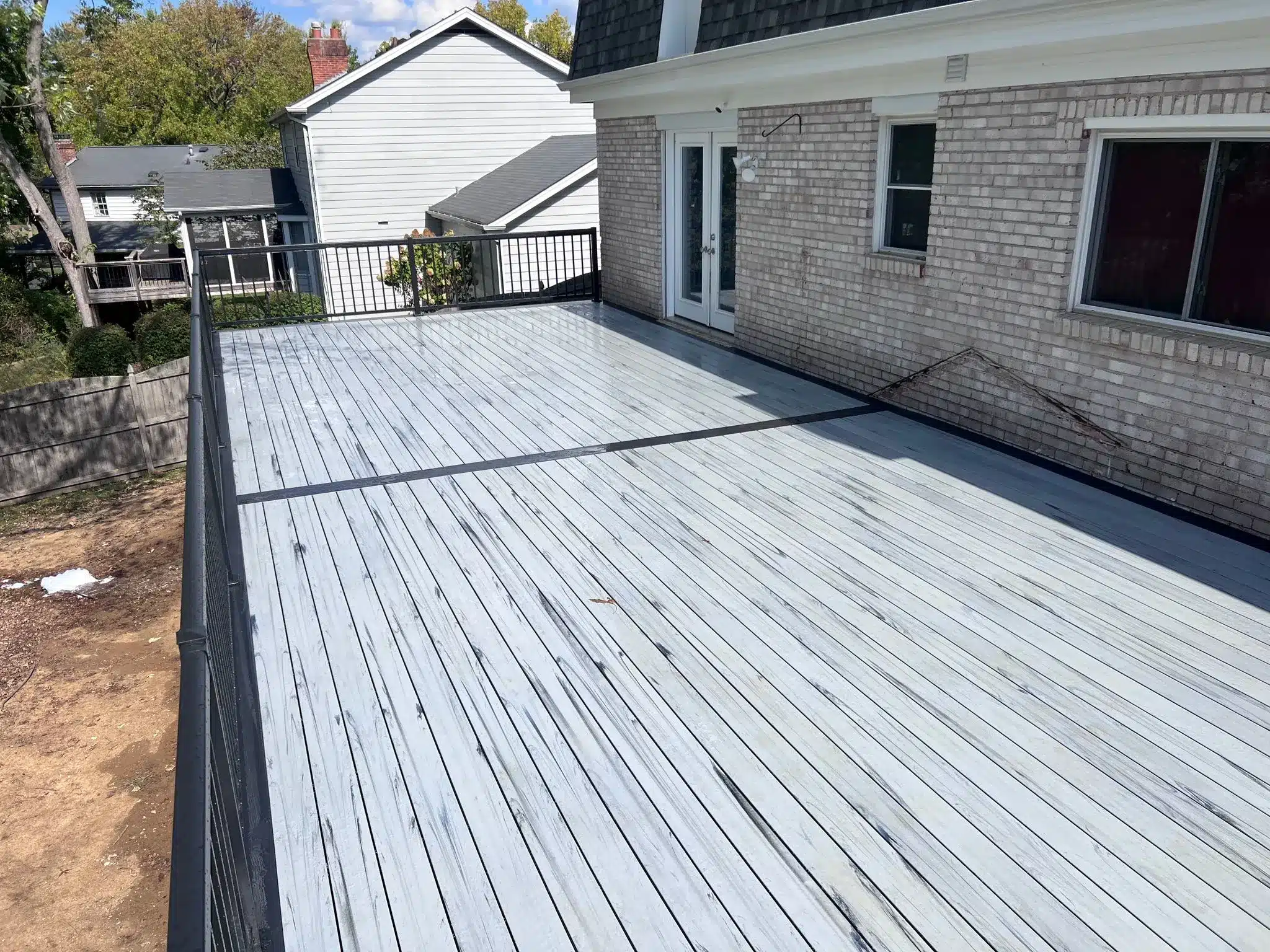
If you are planning a new deck, or trying to gauge how much life is left in the one you already have, we are glad to take a look. We will tell you what your existing frame is actually doing, what a pressure treated frame should realistically give you on your property, and where an upgraded system would change that math. Contact us for an honest read on the structure.
Its lifespan varies based on moisture exposure, installation quality, drainage, and other conditions. Modern decks may require structural repairs much sooner than older decks.
Modern lumber is generally less dense and uses different treatment methods than older materials, which can affect how it handles long-term moisture and outdoor exposure.
Yes. It remains a practical and cost-effective framing option when properly designed and installed, but it may not match the lifespan of some modern decking materials.